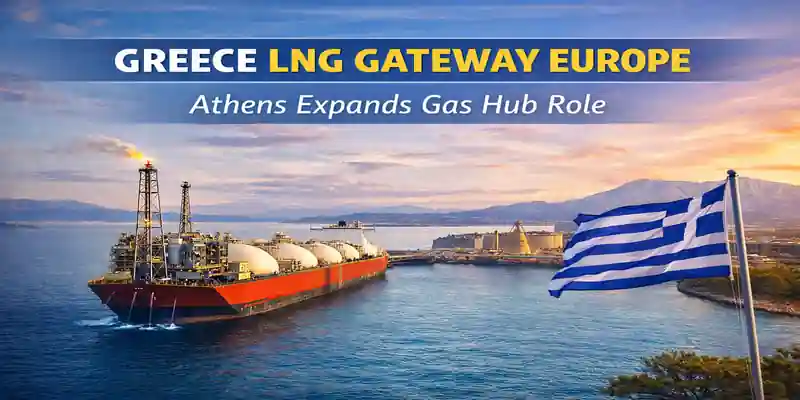
Greece LNG gateway Europe ambitions are gaining attention as Athens strengthens its position as a key liquefied natural gas entry point. With the European Union preparing to phase out Russian gas imports by 2027, Greece is leveraging infrastructure upgrades, LNG terminals, and regional pipelines to support Europe’s energy diversification.
Athens Strengthens Role in Europe’s LNG Supply Chain
Europe’s dependence on Russian gas has declined significantly since 2022, opening space for alternative suppliers such as the United States and Middle Eastern exporters. Greece is capitalising on this shift by expanding LNG imports and improving regional connectivity across southeastern Europe.
Policymakers see LNG as a long-term component of Europe’s energy security strategy rather than a temporary replacement.
Revithoussa Terminal Becomes Regional Gas Hub
The Revithoussa LNG terminal near Athens remains central to Greece’s gas ambitions. After a recent capacity expansion, the facility is handling higher cargo volumes and supporting cross-border gas flows.
Regasified LNG is transported through the Vertical Corridor linking Greece with Bulgaria, Romania, Moldova, and Ukraine. Planned investments in pipeline upgrades are expected to improve supply reliability by 2027.
Pipeline Projects Enhance Regional Connectivity
Several infrastructure developments have strengthened Greece’s position in the European gas network:
-
Trans Adriatic Pipeline (TAP) connecting Greece to Italy
-
Interconnector Greece-Bulgaria improving Balkan gas access
-
Additional compressor stations boosting northern transmission capacity
These projects have helped diversify supply routes and improve energy resilience across the region.
Long-Term LNG Demand Signals Market Confidence
Short-term demand for LNG transport capacity remains mixed due to regulatory and market uncertainties. However, long-term bookings at the Revithoussa terminal through 2040 indicate growing confidence in Greece’s strategic role.
Energy analysts expect demand to accelerate as Europe completes its transition away from Russian pipeline gas.
Conclusion
Greece is steadily emerging as a strategic Greece LNG gateway Europe. Continued infrastructure expansion, stronger transatlantic energy ties, and regional pipeline integration are likely to reinforce Athens’ role in Europe’s evolving gas supply landscape.