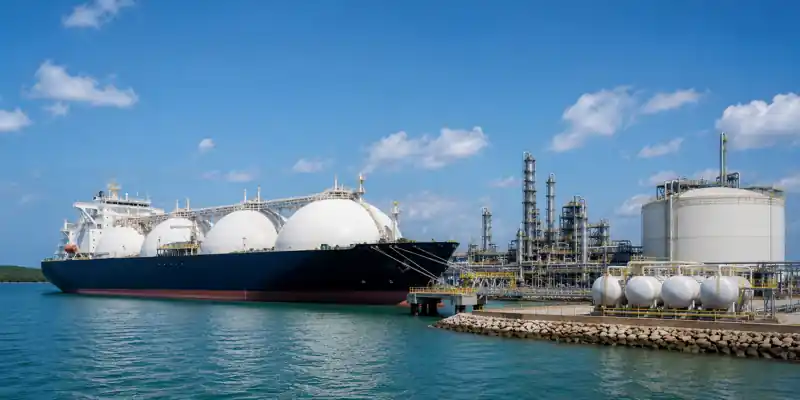
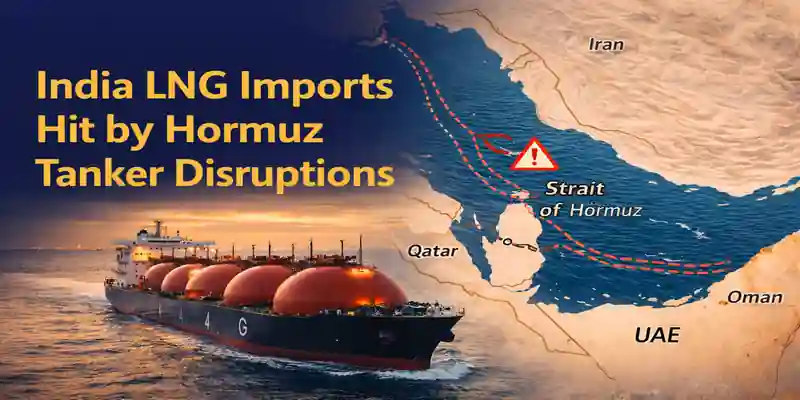
India LNG imports are facing fresh pressure as tensions around the Strait of Hormuz disrupt tanker movements. Several vessels supplying cargo from the Middle East have diverted routes, raising concerns over short-term supply at Dahej. The situation could tighten India LNG imports and push up landed prices in the coming days.
Satellite tracking data shows disruptions in vessel movements between Qatar and India, especially impacting supplies to western India.
Dahej Terminal Supply May Tighten
Only one of Indian state-run Petronet LNG Limited’s three dedicated LNG tankers has recently managed to unload cargo at its 17.5 million tonnes per year Dahej terminal.
-
The 138,000 cubic metre vessel Disha, carrying around 60,000 tonnes of LNG, is currently waiting near the Ras Laffan terminal after loading.
-
Another carrier, Raahi, unloaded a similar volume at Dahej on 1 March.
-
The 155,000 cubic metre vessel Aseem rerouted away from the Strait of Hormuz while returning to Ras Laffan after unloading on 24 February.
Traders estimate that Dahej may have only 2–3 days of LNG supply buffer if further delays occur.
Limited Immediate Impact, But Risks Remain
Despite tanker diversions, the wider supply impact remains limited for now. LNG shipments from Africa and Australia continue without disruption.
Additionally, Oman’s 11.4 million tonnes per year Qalhat LNG terminal may offer some relief. The terminal avoids the narrowest and most sensitive section of the Strait of Hormuz, making it a relatively safer export route.
However, LNG carrier availability is tightening. Several shipping companies have suspended or rerouted vessels. This may reduce cargo availability in the coming weeks.
Strategic Importance of Strait of Hormuz
The Strait of Hormuz handles nearly 20% of globally traded oil and a significant share of LNG exports from Qatar and the UAE.
Any sustained security threat near Omani, Emirati or Iranian waters could:
-
Increase insurance premiums
-
Extend voyage durations
-
Raise freight costs
-
Reduce effective LNG supply
These factors could directly impact India’s landed LNG prices.
GAIL Tankers and Import Outlook
Two out of four LNG time-chartered vessels of GAIL (India) Limited are currently heading toward India across the Atlantic basin. The remaining two are en route to Europe for cargo discharge.
Indian buyers are likely to delay spot LNG purchases this week amid uncertainty. However, spot demand may re-emerge next week if tensions do not escalate further.
The ongoing Holi festival could also temporarily limit additional spot demand.
India LNG Imports Data and Price Impact
Nearly half of India’s monthly LNG imports originate from the Middle East, amounting to close to 2 million tonnes.
India’s LNG imports declined 27% month-on-month in February to 1.89 million tonnes.
Importers expect disruptions to push landed LNG prices at west India’s Dahej terminal above $12 per million British thermal units (mmBtu).
Recent market assessments placed second-half March delivery prices at:
-
$10.26/mmBtu for west India
-
$10.36/mmBtu for east India
Prices were slightly higher compared to the previous session.
Outlook
If tensions persist around the Strait of Hormuz, India’s LNG imports could face tighter supply conditions and higher landed costs.
However, diversified supply sources from Africa and Australia may help cushion the immediate impact.
The situation remains fluid. Importers and traders are closely monitoring tanker movements and freight rates.