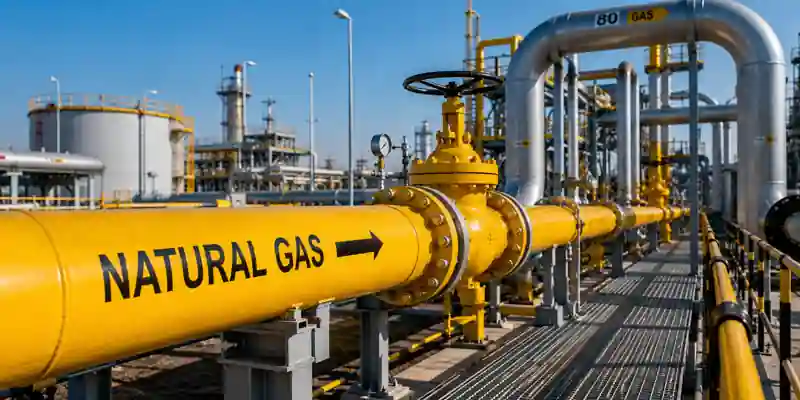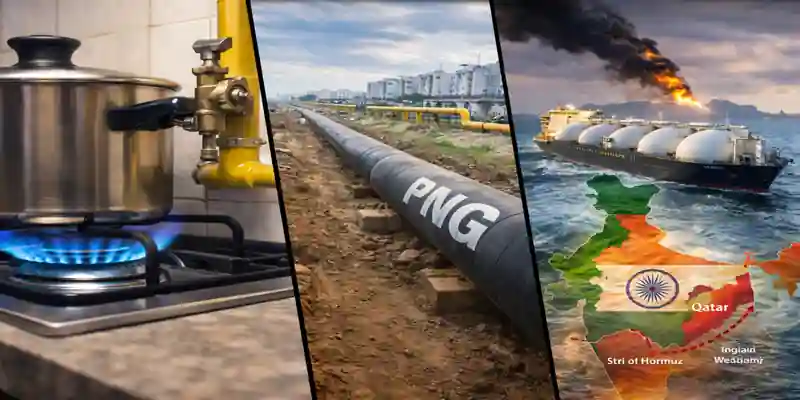
India gas supply is under pressure as the Iran war disrupts global energy routes. The conflict has already affected LPG availability. Now, concerns are rising about PNG supply and LNG imports in India.
The situation is closely linked to LNG shipments passing through the Strait of Hormuz. Any disruption can impact households, fertilizer plants, and industries.
Rising PNG Demand in India
India’s gas network supports:
-
Household PNG connections
-
CNG vehicles
-
Fertilizer plants
-
Industrial operations
Among these, household demand is growing the fastest.
India now has over 15 million PNG connections. The government continues to promote piped gas over LPG cylinders.
Meanwhile, CNG demand is also rising steadily.
Iran War and LNG Import Risks
The Iran conflict has increased risks for global LNG trade.
-
Around 50–55% of India’s LNG imports pass through Hormuz
-
LNG contributes nearly half of total gas availability
This creates uncertainty for future supplies.
Supply Stable for Households
Despite global tensions, India gas supply for households remains stable.
This is because:
-
Around 50% comes from domestic production
-
The government prioritizes PNG and CNG users
Domestic output from ONGC and Reliance provides a strong buffer.
Fertilizer Sector Gets Priority
In times of shortage, the government protects key sectors.
Priority allocation includes:
-
Households
-
Fertilizer plants
-
Transport (CNG)
-
Industry
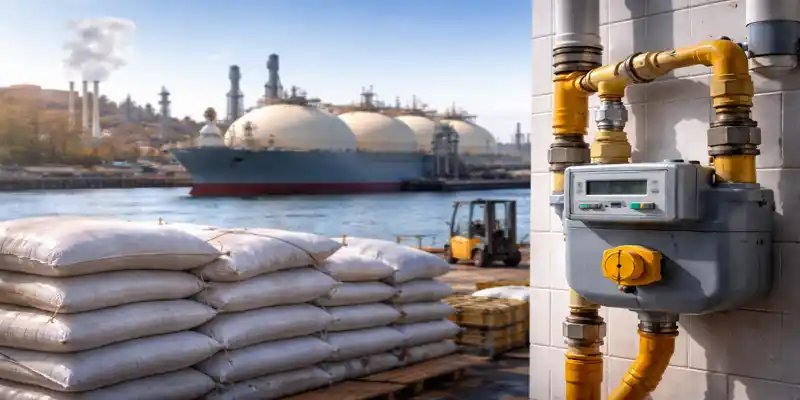
This ensures uninterrupted gas supply for fertilizer production.
However, industrial users are already facing supply cuts of up to 20%.
Industry Faces Maximum Pressure
When supply tightens:
-
Factories switch to alternate fuels
-
Power plants reduce generation
This increases costs and lowers efficiency.
Dependence on LNG Imports
India relies heavily on LNG imports.
-
Imports reached 24–25 million tonnes in 2025
-
Over 50% comes from Qatar
Other suppliers include the US, Australia, and Russia.
However, most shipments pass through the Strait of Hormuz.
Limited Storage Capacity
India does not maintain strategic LNG reserves.
Gas is stored at terminals like:
-
Dahej
-
Hazira
-
Kochi
-
Ennore
These facilities hold only 1–2 weeks of supply.
This makes the system sensitive to disruptions.
Price Impact Likely
There may not be an immediate shortage. However, India gas supply could become more expensive.
If LNG supply tightens:
-
Gas prices will rise
-
Industrial demand will fall
-
Fertilizer production costs may increase
Households will continue receiving gas, but at higher prices.
Conclusion
The India gas supply outlook remains stable in the short term. However, risks are increasing.
-
PNG supply is safe for now
-
Fertilizer sector is protected
-
Industry faces the biggest impact
In the long term, India must diversify LNG sources and build reserves.