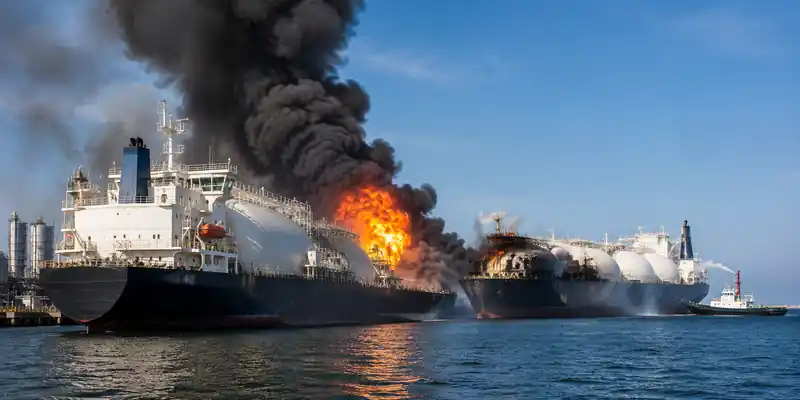
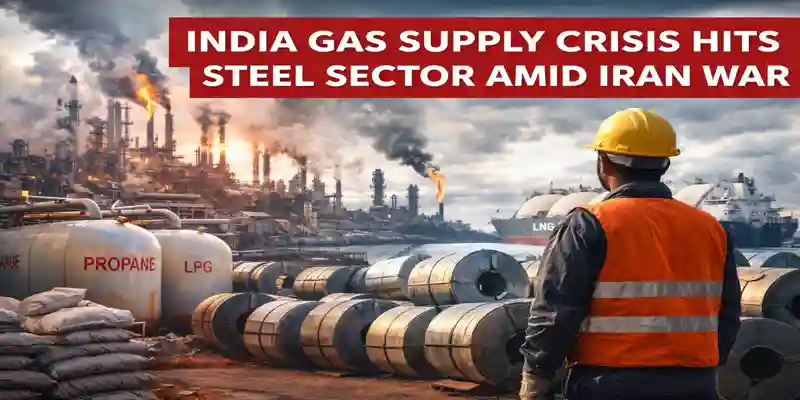
The impact of the Middle East conflict is no longer limited to oil markets. It is now reaching India’s industrial backbone. What began as a disruption in fuel shipments is slowly turning into a broader India gas supply crisis, affecting steelmakers across the country.
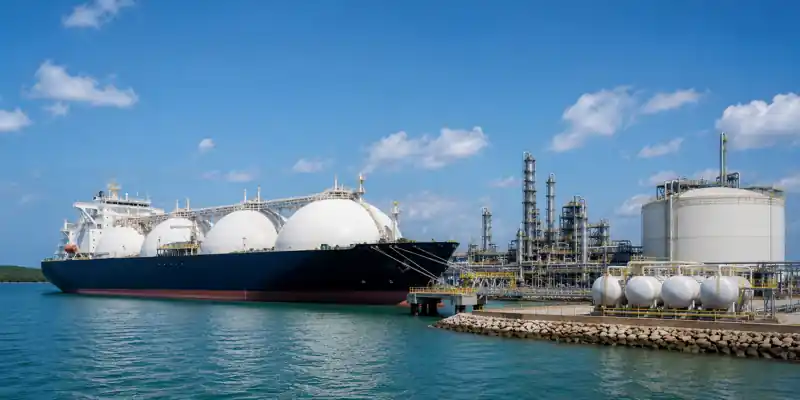
At first, the warning signs were subtle. Delays in LNG cargoes and rising fuel prices raised concerns. However, the situation has now started to affect operations on the ground.
Inside the JSW Group, one of India’s largest steel producers, the pressure is already visible. An internal memo reveals that disruptions in fuel supplies and maritime logistics have begun to strain operations. One of its plants may even shut down in the coming days.
The company’s coated steel division faces another challenge. It risks failing to meet its commitments under the government’s production-linked incentive scheme. As a result, it has sought a six-month extension. At the same time, a force majeure notice from Petronet LNG has added to the uncertainty, tightening gas availability further.
But JSW is not alone.
Across the industry, the shortage of propane and LPG is beginning to ripple through the value chain. The Indian Steel Association has warned that the impact is widespread. Small and medium enterprises, which form the backbone of the steel ecosystem, are among the hardest hit. Many of these units depend on steady fuel supply for daily production. Now, they are struggling to keep operations running.
The government has stepped in with emergency measures. Gas supply is being diverted to priority sectors such as households and fertilizers. While this protects essential consumption, it leaves industries with limited access. Steelmakers now find themselves competing for shrinking fuel supplies.
Jindal Stainless offers a clear example of how serious the situation has become. The company has already reduced production at its plants. Its operations rely heavily on industrial gases like propane and natural gas. With supplies tightening, several processes have been disrupted. The company has also warned of delays in shipments, especially to the Middle East.
Meanwhile, smaller steel producers are facing even greater difficulties. Many induction furnace units have started cutting output. Some are rationing whatever gas they have left. Secondary producers that depend on scrap and direct reduced iron are also under pressure.
Among large players, ArcelorMittal Nippon Steel India appears particularly exposed. A significant portion of its production relies on gas-based direct reduced iron technology. While the company has taken steps to hedge its gas supply, prolonged disruption could still create serious challenges.
The effects are also spreading to the galvanized steel sector. This segment depends heavily on propane. Smaller processors in this space are already feeling the strain, as fuel shortages begin to bite.
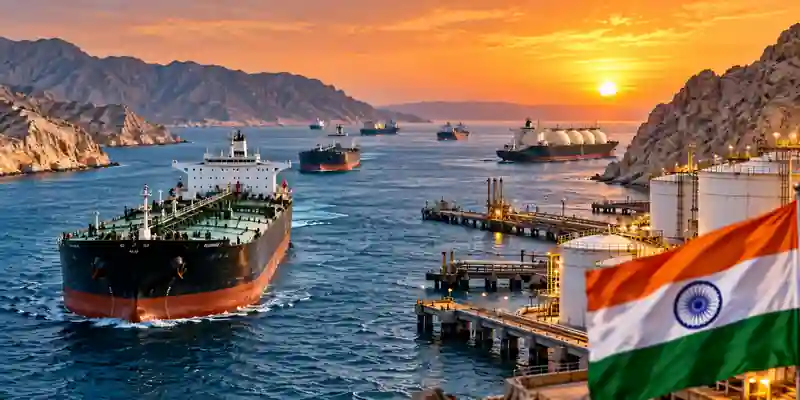
What makes the situation more complex is India’s reliance on LNG imports. A large share of these imports passes through the Strait of Hormuz, a region now at the center of geopolitical tensions. While shipments have not stopped completely, the flow has become uncertain.
Globally, the steel market is also reacting. Early signs of disruption appeared when shipping routes were threatened. Even exports from China to the Middle East have faced hurdles, adding to market volatility.
For now, the crisis is unfolding gradually. There is no sudden halt, but a steady tightening of supply. Industries are adjusting, cutting output, and looking for alternatives. However, if the conflict continues, the pressure could intensify.
The India gas supply crisis has moved beyond theory. It is now visible in factories, production lines, and supply chains. And for the steel sector, this may only be the beginning.