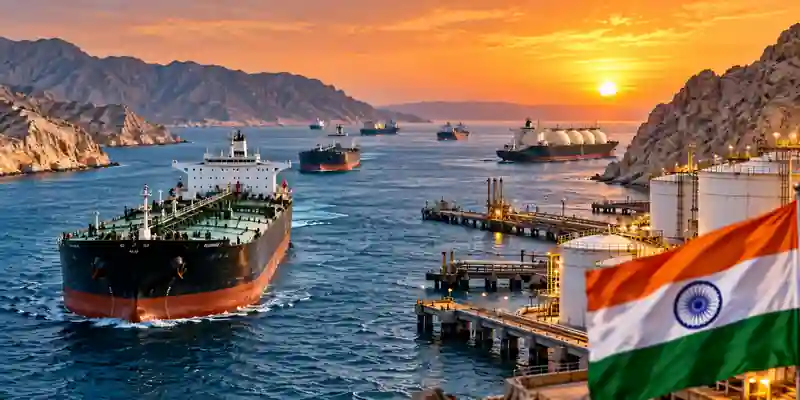
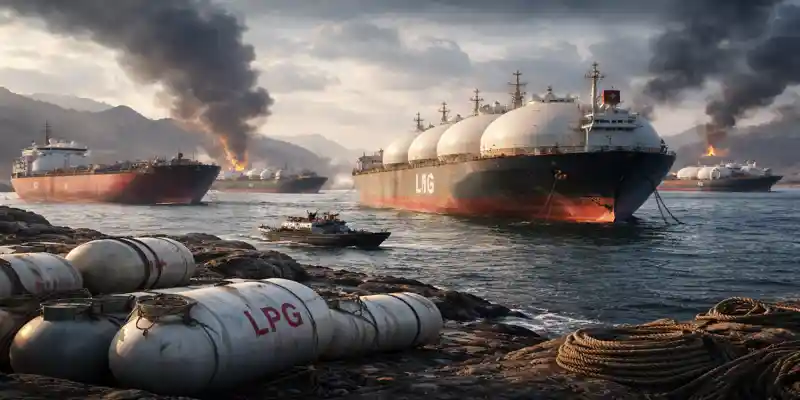
The India gas crisis has taken a serious turn, as several Indian vessels remain stranded near the Strait of Hormuz amid escalating tensions in the Middle East.
India has now sought safe passage for 22 vessels stuck west of the strait, highlighting growing concerns over energy security and supply disruptions.
The situation, however, showed a small sign of relief. Iran has allowed a few Indian ships to pass through the strategic route in what officials described as a rare exception during the ongoing blockade.
Foreign affairs ministry spokesperson Randhir Jaiswal said India is actively engaging with all major stakeholders in the region. These include Gulf Cooperation Council countries, Iran, the United States, and Israel. The focus remains on ensuring energy security and protecting Indian interests.
At the same time, Iran’s Ambassador to India, Mohammad Fathali, confirmed that some Indian vessels have been granted safe passage. He shared this update during a public event in New Delhi.
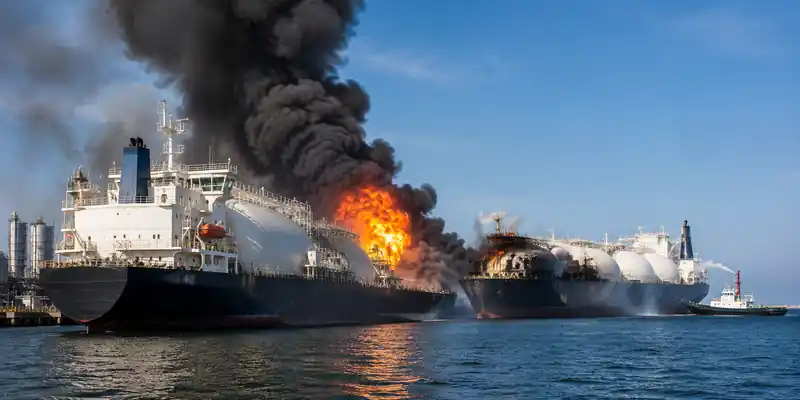
The Strait of Hormuz has become a critical flashpoint. Following military action by the United States and Israel, Iran has largely restricted maritime movement through the corridor.
This route is vital for global energy trade.
-
Nearly 20% of global oil supply passes through it
-
A significant share of seaborne LNG shipments also depends on this route
Any disruption here directly impacts countries like India, which rely heavily on energy imports.
The impact is already visible at home.
India is facing one of its worst gas supply crises in decades. To manage the situation, the government has reduced gas allocation to industries while prioritizing household consumption, especially cooking gas.
This move has helped avoid immediate shortages for consumers. However, industries are bearing the brunt of the supply cuts.
According to shipping officials, the stranded vessels include:
-
4 crude oil tankers
-
6 LPG carriers
-
1 LNG vessel
These ships are crucial for maintaining India’s fuel supply chain.
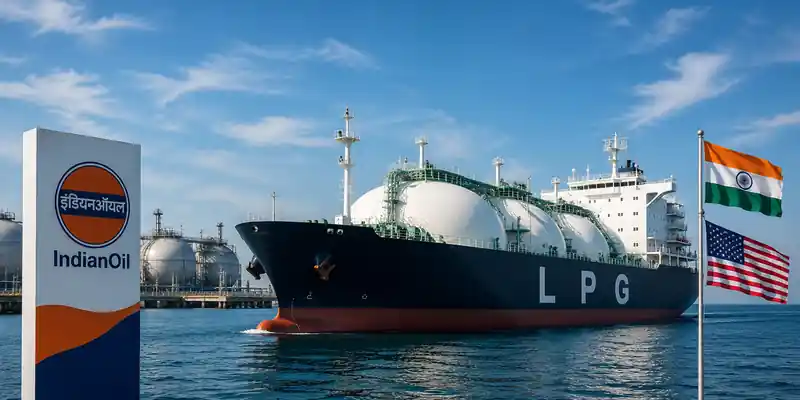
Despite the disruptions, there has been some progress. Two Indian vessels — Shivalik and Nanda Devi, chartered by Indian Oil Corporation — have safely crossed the strait.
They are expected to reach Mundra and Kandla ports with more than 92,000 metric tonnes of LPG, offering temporary relief to the domestic market.
Beyond immediate logistics, India is also working on the diplomatic front.
The government is trying to build consensus among BRICS nations on the evolving Middle East crisis. As the current chair of the group, India is playing a key role in shaping a coordinated response.
India gas crisis