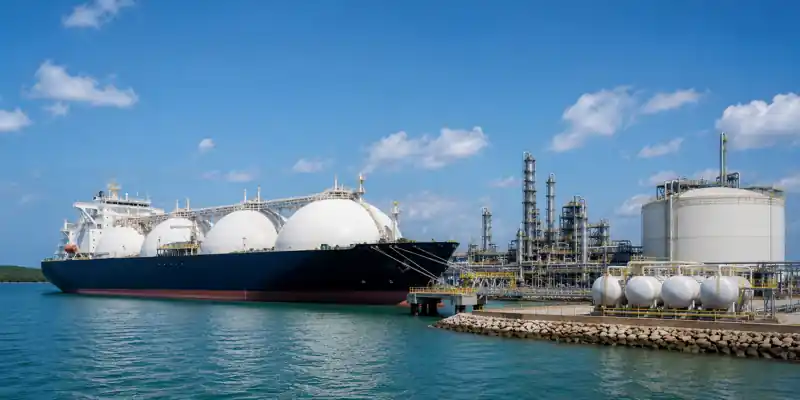
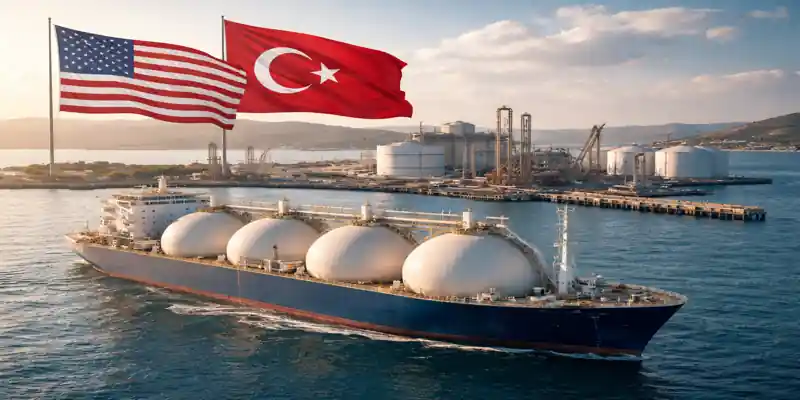
The Export-Import Bank of the United States (US Exim) has signed a US$400 million export insurance agreement to support liquefied natural gas (LNG) shipments from the United States to Turkey. The move highlights growing global demand for US LNG and strengthens energy cooperation between the two countries.
Hartree Partners to Supply US LNG to Turkey’s BOTAŞ
Under the agreement, New York-based energy trading firm Hartree Partners will export US-sourced LNG to BOTAŞ Petroleum Pipeline Corporation, Turkey’s state-owned energy company. The deal provides insurance coverage that reduces financial risk and enables smoother long-term LNG trade between the partners.
Stephen Hendel, founding managing director of Hartree Partners, said the transaction aligns with the company’s strategy of delivering cost-effective and reliable LNG supply chain solutions tailored to customer needs. The agreement is expected to enhance supply security for Turkey while expanding market opportunities for US LNG exporters.
US Exim Highlights Strategic Energy and Trade Benefits
John Jovanovic, president and chairman of US Exim, emphasized that the deal supports American workers and strengthens strategic partnerships. He noted that US energy exports continue to play a critical role in meeting global demand and boosting economic growth.
US Exim also reported that the United States became the world’s largest LNG exporter, shipping more than 111 million metric tonnes in 2025. This milestone reflects the country’s expanding liquefaction capacity and strong international demand for cleaner-burning natural gas.
Hartree Partners’ Role in Supply Chain Security Initiative
Hartree Partners recently joined Project Vault, a supply chain security initiative involving the US government and private companies. The program focuses on securing and storing critical raw materials across the United States, further strengthening the resilience of global energy and commodity supply chains.
Climate Concerns and Legal Challenges Surround LNG Expansion
Despite strong growth in LNG investments, the sector has faced criticism from climate advocacy groups. Environmental organizations argue that expanding gas infrastructure could increase greenhouse gas emissions and delay the transition to renewable energy.
US Exim itself has encountered scrutiny over its LNG financing activities. The agency faced legal challenges related to its support for a US$20 billion LNG project in Mozambique, led by TotalEnergies. In March, US Exim approved a US$4.7 billion loan for the project, which has experienced delays and security concerns.
Friends of the Earth US criticized the approval process, claiming environmental reviews and public consultation were insufficient. The decision also sparked political debate, partly because the Mozambique project could compete with US LNG exports in global markets.
Outlook: Rising Demand to Sustain LNG Trade Momentum
The US Exim–Turkey LNG insurance deal signals continued momentum in global LNG trade. As energy security remains a priority for importing nations, US LNG exporters are likely to benefit from new partnerships and financing mechanisms.
However, the industry must balance growth with environmental concerns and regulatory scrutiny. Going forward, LNG investments will play a key role in shaping the global energy transition while supporting reliable energy supply.