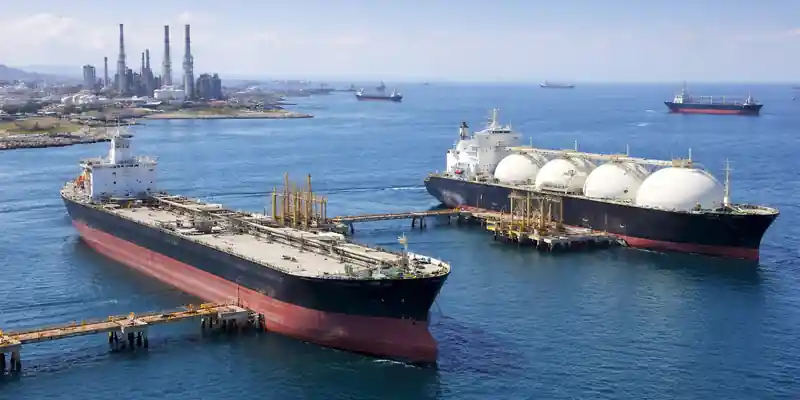
Asia oil and LNG imports are under growing pressure as tensions rise in the Middle East. The region supplies a major share of crude oil and liquefied natural gas to Asian economies. If the conflict widens, Asia oil and LNG imports could face prolonged disruption through the Strait of Hormuz.
Here is a country-wise analysis of how exposed major buyers are and how strong their reserves remain.
China’s Exposure to Asia Oil and LNG Imports Risk
China is the world’s largest crude importer. Around 50% of its crude comes from the Middle East.
It imported 1.38 million barrels per day of Iranian crude last year. That equals about 13% of its seaborne imports. Additionally, 42 million barrels of Iranian oil were stored in floating tankers earlier this year.
China has built large strategic reserves. Analysts estimate stockpiles at nearly 900 million barrels. That equals almost three months of import cover.
China is also the largest LNG importer. About one-third of its LNG comes from Middle Eastern exporters. Therefore, oil and LNG imports disruption would impact China significantly, despite its reserves.
Japan’s Dependence on Asia Oil and LNG Imports
Japan sources nearly 95% of its oil imports from the Middle East. Around 70% of that supply passes through the Strait of Hormuz.
In January, Japan imported 2.8 million barrels per day. Saudi Arabia alone supplied 1.6 million bpd. The UAE, Kuwait and Qatar provided the rest.
However, Japan maintains emergency reserves equal to 254 days of consumption. That gives Tokyo a strong buffer.
Japan is also the second-largest LNG importer. Around 11% of its LNG comes from Qatar, Oman and the UAE. Current LNG inventories cover about three weeks of consumption.
Still, any prolonged oil and LNG imports disruption could tighten supply chains.
South Korea’s Strategy to Secure Asia Oil and LNG Imports
South Korea imports nearly all its energy needs.
Around 70% of its crude oil and 20% of LNG come from the Middle East. The government holds 100 million barrels in strategic reserves. Private companies hold another 95 million barrels.
Together, these reserves can cover about 208 days of demand.
If oil and LNG imports face extended disruption, Seoul plans to diversify supply sources outside the Middle East.
India’s Growing Reliance on Asia Oil and LNG Imports
India increased its Middle East crude share to 55% in January. Imports reached about 2.74 million barrels per day. Refiners reduced Russian intake, raising regional dependence.
Official data show India’s crude and fuel reserves can cover around 74 days of demand. However, refining sources suggest actual availability may be closer to 20–25 days.
India is the fourth-largest LNG importer. Nearly two-thirds of its LNG comes from Qatar, the UAE and Oman.
Therefore,disruption could affect India faster than some other Asian buyers.