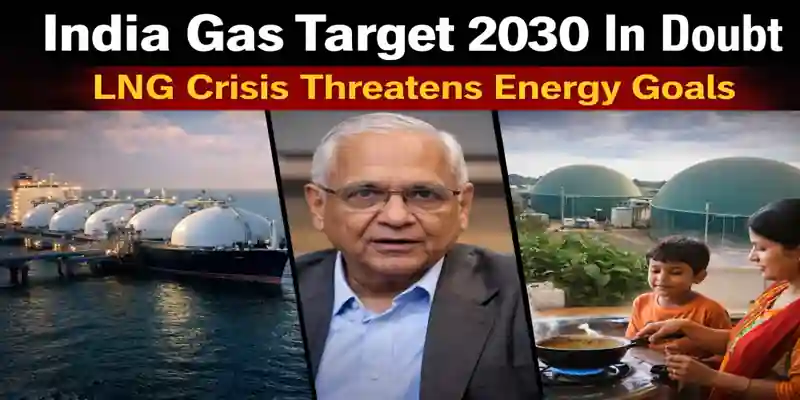
India gas target 2030 may need a major revision due to disruptions in global LNG supply caused by the ongoing conflict in West Asia, according to noted energy expert Kirit Parikh. He also suggested reducing domestic gas consumption and exploring alternative energy sources to maintain economic stability.
India Gas Target 2030 Faces Reality Check
India had set an ambitious India gas target to increase the share of natural gas in its energy mix to 15%, positioning gas as a transition fuel to reduce carbon emissions.
However, Parikh emphasized that the current geopolitical situation has changed priorities.
“The focus now is financial stability of the country and not just reducing carbon emissions,” he said.
India has been shifting from a crude oil-based economy to a gas-based economy, but rising LNG prices and supply uncertainties are forcing policymakers to rethink this strategy.
India Gas Target 2030 and Policy Background
Kirit Parikh previously headed a government panel on gas pricing reforms. The committee recommended full deregulation of gas prices by 2027.
In April 2023, the government accepted key recommendations and:
- Introduced floor and ceiling pricing
- Reduced CNG and PNG prices by around 10%
These reforms aimed to stabilize domestic gas pricing while encouraging consumption.
India Gas Target 2030: Need to Reduce Gas Consumption
Parikh highlighted that India gas target 2030 must align with available supply. He suggested reducing consumption where necessary.
- Lower gas availability → Higher prices
- Higher prices → Reduced consumption
He recommended alternatives such as:
- Biogas
- Waste-to-gas projects
- Other renewable substitutes
According to him, increasing gas prices is more effective than rationing.
“Higher prices improve efficiency, while rationing does not guarantee better use.”
India Gas Target 2030 Impact on Fertilizer and City Gas
A revision in India gas target could directly impact key sectors:
- Fertilizer industry (heavily dependent on gas feedstock)
- City gas distribution (CNG & PNG)
- Industrial users
Reduced gas availability may increase production costs, especially for fertilizer plants, which rely on stable gas supplies.
Bureaucratic Challenges Slow Domestic Gas Growth
Despite allowing 100% FDI in oil and gas, India has struggled to attract foreign investment.
Parikh pointed out key issues:
- Excessive bureaucratic approvals
- Lack of marketing freedom for gas producers
- Limited attractiveness of Indian gas fields
“The number of permits required is not just large, it is very large,” he said.
He added that global companies will invest only if India offers high returns and ease of doing business, similar to incentives given to electronics manufacturers.
Outlook for India’s Gas Strategy
The India gas target is now at a turning point:
- LNG supply disruptions are increasing uncertainty
- Prices remain volatile
- Domestic production growth is slow
India may need to rebalance its energy strategy, focusing on affordability, supply security, and alternative fuels alongside climate goals.